Blackboard App
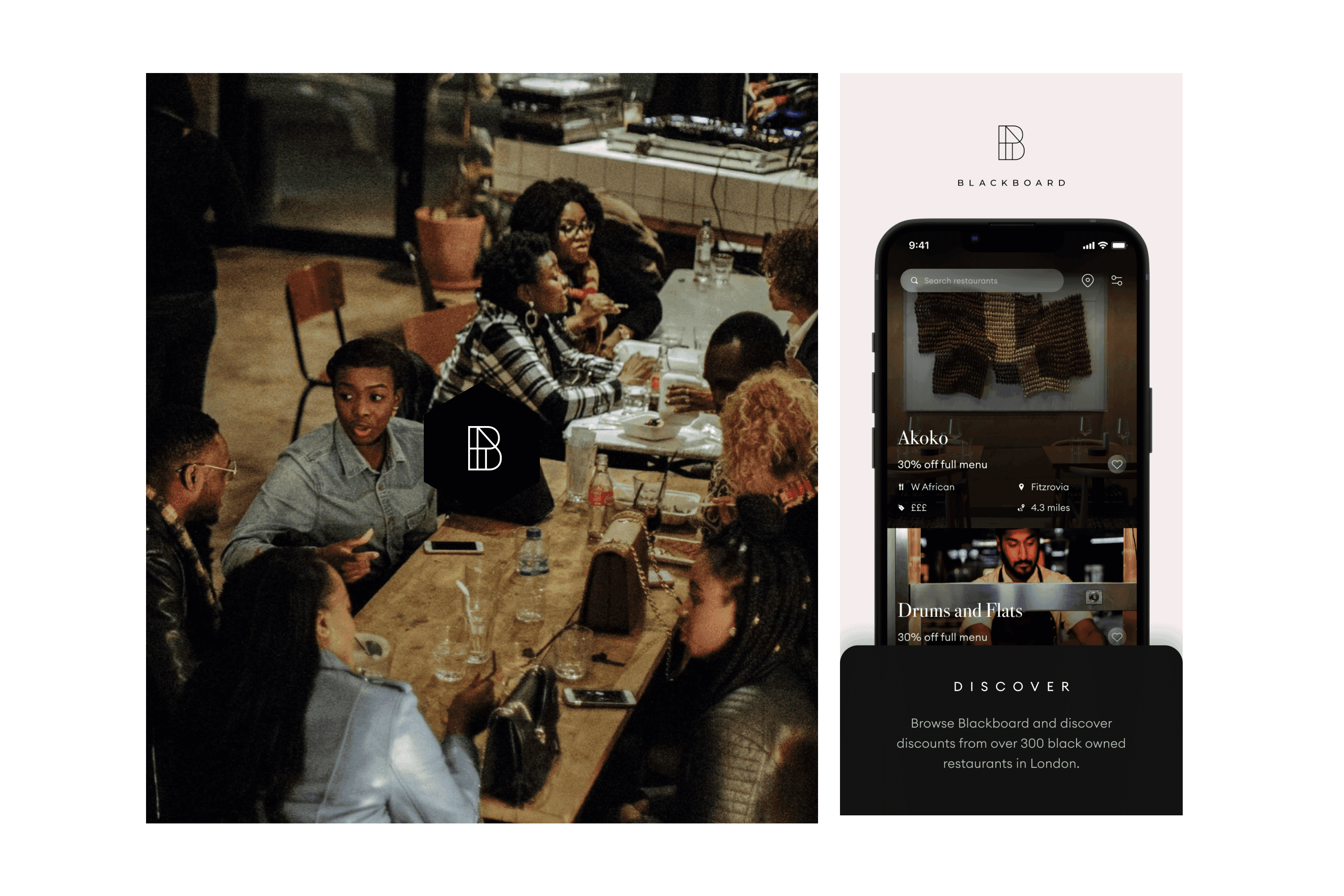
Blackboard is a community-driven mobile app that helps people find, explore, and support Black-owned restaurants across London. The goal was to design a simple, trustworthy experience that makes discovery enjoyable, and creates a tangible economic impact for local businesses. This was a greenfield project with no previous product or patterns to build from. I led the end-to-end product design process, from discovery and user research to flows, prototyping, visual design, and collaboration with engineering.
Client:
Blackboard
Industry:
Food & Beverage
Deliverables:
End to end Product Design
Context:
Lead Product Designer
The Problem
London has a vibrant food culture, yet Black-owned restaurants and pop-ups remain difficult to discover. Word-of-mouth is inconsistent, existing directories are incomplete, and many smaller vendors lack visibility on mainstream platforms.
Key challenges
People who want to support these businesses don’t know where to start
Restaurant owners struggle to be discovered without heavy reliance on paid ads or social media
No central platform highlights authenticity, trust, and ease of use
Food lovers want curated, reliable recommendations, not endless scrolling
Goal
Create a trusted, mobile-first platform where users can easily:
Discover Black-owned restaurants based on cuisine, vibes, and location
Explore menus, ratings, photos, and stories behind the restaurants
Save and share favourites
Support restaurants through visits and awareness
And equally important:
Give restaurant owners an accessible path to visibility without needing large marketing budgets.
The Problem
London has a vibrant food culture, yet Black-owned restaurants and pop-ups remain difficult to discover. Word-of-mouth is inconsistent, existing directories are incomplete, and many smaller vendors lack visibility on mainstream platforms.
Key challenges
People who want to support these businesses don’t know where to start
Restaurant owners struggle to be discovered without heavy reliance on paid ads or social media
No central platform highlights authenticity, trust, and ease of use
Food lovers want curated, reliable recommendations, not endless scrolling
Goal
Create a trusted, mobile-first platform where users can easily:
Discover Black-owned restaurants based on cuisine, vibes, and location
Explore menus, ratings, photos, and stories behind the restaurants
Save and share favourites
Support restaurants through visits and awareness
And equally important:
Give restaurant owners an accessible path to visibility without needing large marketing budgets.
The Problem
London has a vibrant food culture, yet Black-owned restaurants and pop-ups remain difficult to discover. Word-of-mouth is inconsistent, existing directories are incomplete, and many smaller vendors lack visibility on mainstream platforms.
Key challenges
People who want to support these businesses don’t know where to start
Restaurant owners struggle to be discovered without heavy reliance on paid ads or social media
No central platform highlights authenticity, trust, and ease of use
Food lovers want curated, reliable recommendations, not endless scrolling
Goal
Create a trusted, mobile-first platform where users can easily:
Discover Black-owned restaurants based on cuisine, vibes, and location
Explore menus, ratings, photos, and stories behind the restaurants
Save and share favourites
Support restaurants through visits and awareness
And equally important:
Give restaurant owners an accessible path to visibility without needing large marketing budgets.
Research & Insights
Research intent
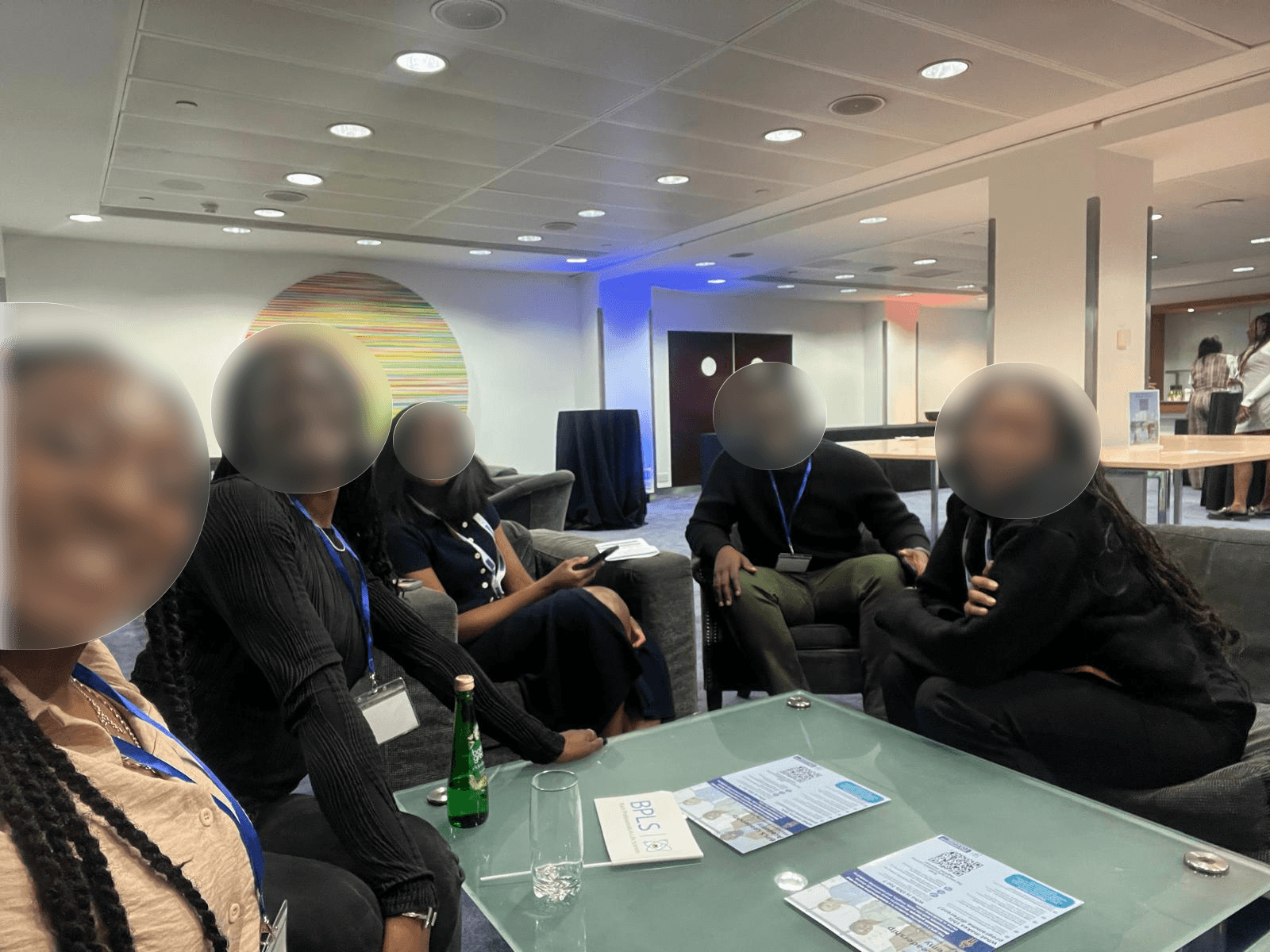
As a greenfield product, research focused on understanding both sides of the ecosystem: diners who wanted to support Black-owned restaurants, and restaurant owners who struggled with visibility.
The goal was to define what a trusted discovery experience should feel like, rather than replicating existing directory patterns.
Methods used
We ran discovery across qualitative and exploratory methods:
User interviews with food lovers and local residents
Interviews with restaurant owners and operators
Competitive review of discovery platforms and social tools
Card sorting to explore navigation and categorisation
Persona development and journey mapping
Key observations
1. Discovery is driven by trust and curation
Users relied heavily on recommendations, social proof, and visual quality. Generic lists felt overwhelming and untrustworthy.
2. “Vibe” mattered more than formal categories
People chose restaurants based on atmosphere, mood, and occasion more than cuisine alone.
3. Restaurant stories increased confidence
Understanding who was behind a restaurant significantly increased users’ desire to visit.
4. Owners wanted visibility without complexity
Restaurant owners valued exposure but lacked time or resources to manage complex digital tools.
Insight synthesis
The strongest insight was that discovery is an emotional decision, not a purely functional one.
Users wanted:
reassurance
inspiration
cultural authenticity
This shifted the product away from being a directory toward a curated, story-led experience.
How insights informed design
Trust needs → verified, curated listings
Vibe-based decisions → atmosphere-driven categories
Emotional connection → story-first restaurant profiles
Owner constraints → low-effort, high-visibility listings
Research & Insights
Research intent
As a greenfield product, research focused on understanding both sides of the ecosystem: diners who wanted to support Black-owned restaurants, and restaurant owners who struggled with visibility.
The goal was to define what a trusted discovery experience should feel like, rather than replicating existing directory patterns.
Methods used
We ran discovery across qualitative and exploratory methods:
User interviews with food lovers and local residents
Interviews with restaurant owners and operators
Competitive review of discovery platforms and social tools
Card sorting to explore navigation and categorisation
Persona development and journey mapping
Key observations
1. Discovery is driven by trust and curation
Users relied heavily on recommendations, social proof, and visual quality. Generic lists felt overwhelming and untrustworthy.
2. “Vibe” mattered more than formal categories
People chose restaurants based on atmosphere, mood, and occasion more than cuisine alone.
3. Restaurant stories increased confidence
Understanding who was behind a restaurant significantly increased users’ desire to visit.
4. Owners wanted visibility without complexity
Restaurant owners valued exposure but lacked time or resources to manage complex digital tools.
Insight synthesis
The strongest insight was that discovery is an emotional decision, not a purely functional one.
Users wanted:
reassurance
inspiration
cultural authenticity
This shifted the product away from being a directory toward a curated, story-led experience.
How insights informed design
Trust needs → verified, curated listings
Vibe-based decisions → atmosphere-driven categories
Emotional connection → story-first restaurant profiles
Owner constraints → low-effort, high-visibility listings
Research & Insights
Research intent
As a greenfield product, research focused on understanding both sides of the ecosystem: diners who wanted to support Black-owned restaurants, and restaurant owners who struggled with visibility.
The goal was to define what a trusted discovery experience should feel like, rather than replicating existing directory patterns.
Methods used
We ran discovery across qualitative and exploratory methods:
User interviews with food lovers and local residents
Interviews with restaurant owners and operators
Competitive review of discovery platforms and social tools
Card sorting to explore navigation and categorisation
Persona development and journey mapping
Key observations
1. Discovery is driven by trust and curation
Users relied heavily on recommendations, social proof, and visual quality. Generic lists felt overwhelming and untrustworthy.
2. “Vibe” mattered more than formal categories
People chose restaurants based on atmosphere, mood, and occasion more than cuisine alone.
3. Restaurant stories increased confidence
Understanding who was behind a restaurant significantly increased users’ desire to visit.
4. Owners wanted visibility without complexity
Restaurant owners valued exposure but lacked time or resources to manage complex digital tools.
Insight synthesis
The strongest insight was that discovery is an emotional decision, not a purely functional one.
Users wanted:
reassurance
inspiration
cultural authenticity
This shifted the product away from being a directory toward a curated, story-led experience.
How insights informed design
Trust needs → verified, curated listings
Vibe-based decisions → atmosphere-driven categories
Emotional connection → story-first restaurant profiles
Owner constraints → low-effort, high-visibility listings

Defining the Experience
Experience principles
I shaped the core UX principles early to guide every decision:
Authentic – celebrate culture, people, and stories
Effortless – frictionless navigation and search
Warm – create a sense of place and community
Trust-driven – verified listings, clear information
Defining the Experience
Experience principles
I shaped the core UX principles early to guide every decision:
Authentic – celebrate culture, people, and stories
Effortless – frictionless navigation and search
Warm – create a sense of place and community
Trust-driven – verified listings, clear information
Defining the Experience
Experience principles
I shaped the core UX principles early to guide every decision:
Authentic – celebrate culture, people, and stories
Effortless – frictionless navigation and search
Warm – create a sense of place and community
Trust-driven – verified listings, clear information
Ideation & Flow Design
1. Core user flows
I mapped out the fundamental journeys:
Browse restaurants by category, area, or style
View restaurant details (story, menu, images, opening times)
Save or share places
Search using cuisine, vibe, location, price
Visit planning
2. Early sketches & wireframes
Wireframes focused on:
A clean, cinematic visual hierarchy
Bold photography
Clear navigational anchors
A card-driven layout that supports storytelling
3. Usability testing
I tested the lo-fi prototype with 6 users.
Findings included:
People wanted “vibe-based” categories like cosy, date night, music-led, street food
Restaurant stories needed more prominence
Users preferred a single unified search over separate filters
These insights shaped the final IA.
Ideation & Flow Design
1. Core user flows
I mapped out the fundamental journeys:
Browse restaurants by category, area, or style
View restaurant details (story, menu, images, opening times)
Save or share places
Search using cuisine, vibe, location, price
Visit planning
2. Early sketches & wireframes
Wireframes focused on:
A clean, cinematic visual hierarchy
Bold photography
Clear navigational anchors
A card-driven layout that supports storytelling
3. Usability testing
I tested the lo-fi prototype with 6 users.
Findings included:
People wanted “vibe-based” categories like cosy, date night, music-led, street food
Restaurant stories needed more prominence
Users preferred a single unified search over separate filters
These insights shaped the final IA.
Ideation & Flow Design
1. Core user flows
I mapped out the fundamental journeys:
Browse restaurants by category, area, or style
View restaurant details (story, menu, images, opening times)
Save or share places
Search using cuisine, vibe, location, price
Visit planning
2. Early sketches & wireframes
Wireframes focused on:
A clean, cinematic visual hierarchy
Bold photography
Clear navigational anchors
A card-driven layout that supports storytelling
3. Usability testing
I tested the lo-fi prototype with 6 users.
Findings included:
People wanted “vibe-based” categories like cosy, date night, music-led, street food
Restaurant stories needed more prominence
Users preferred a single unified search over separate filters
These insights shaped the final IA.
The Final Design
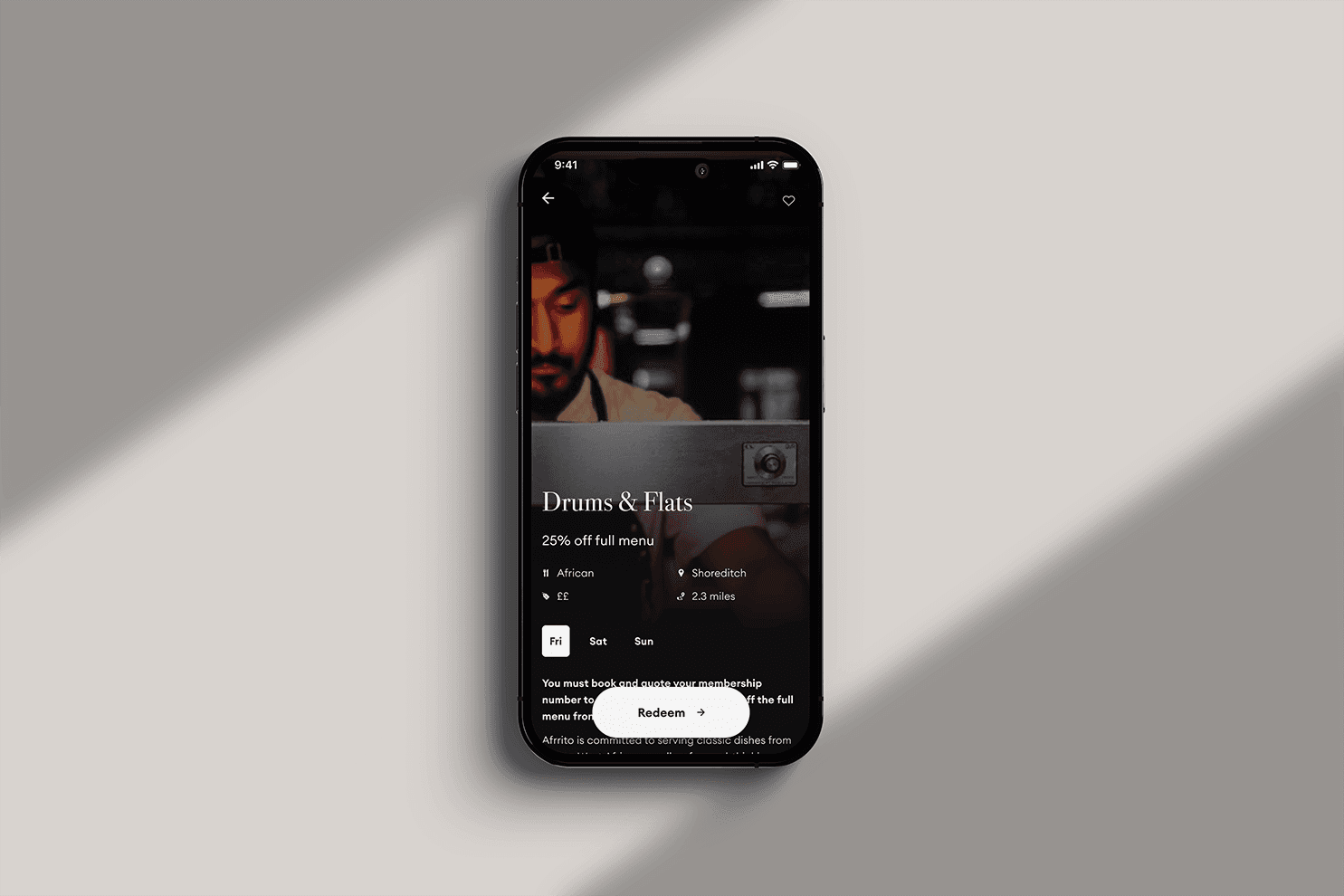
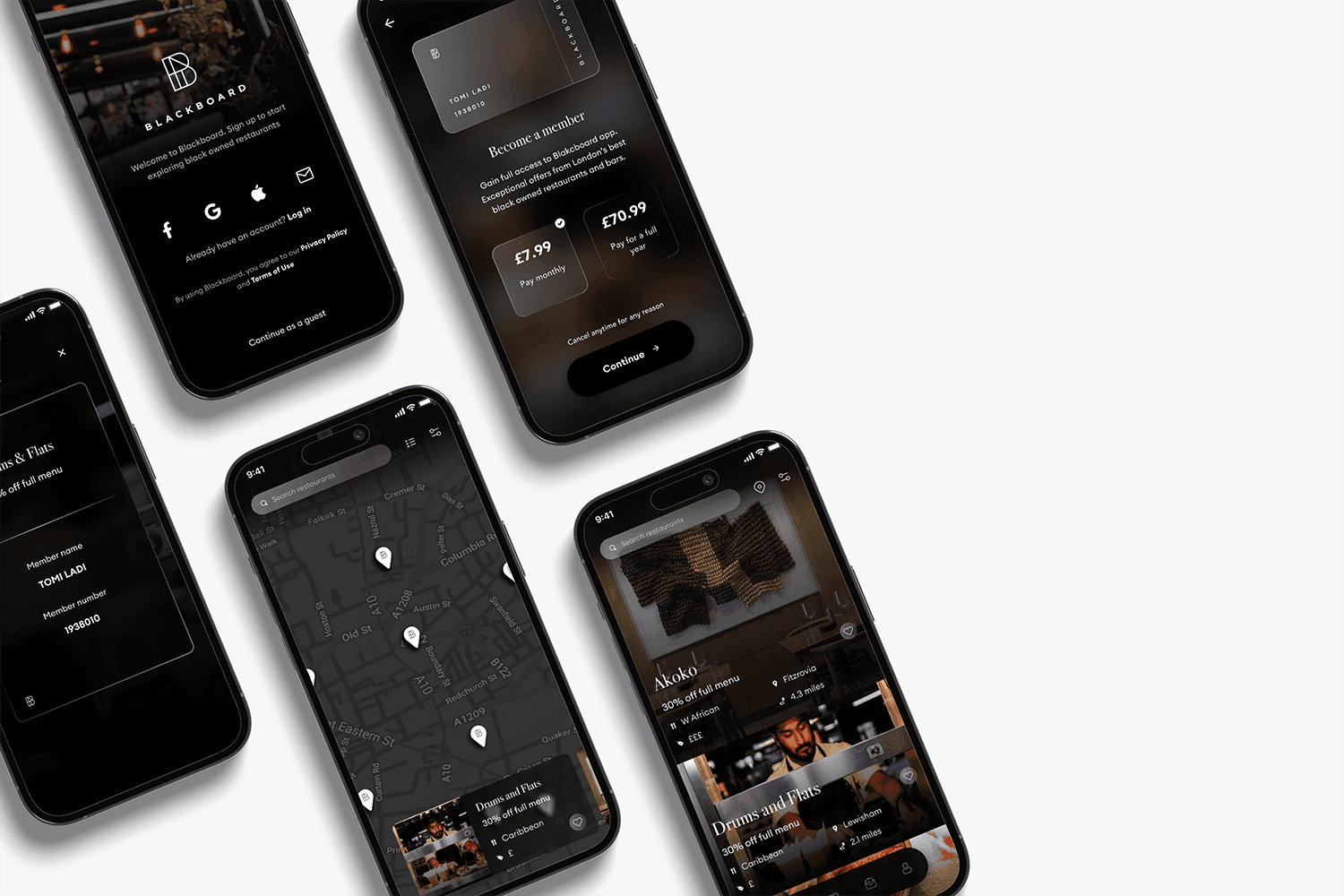
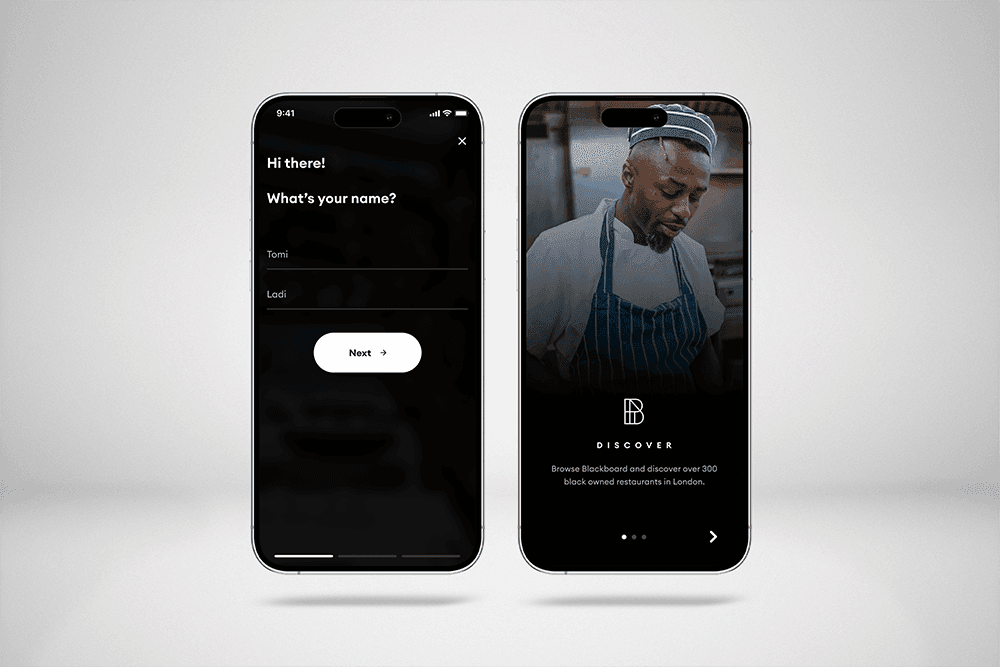
Home / discovery feed
A curated mix of new spots, popular places, categories, and neighbourhood highlights
Bold imagery to inspire discovery
Personalised suggestions based on browsing behaviour
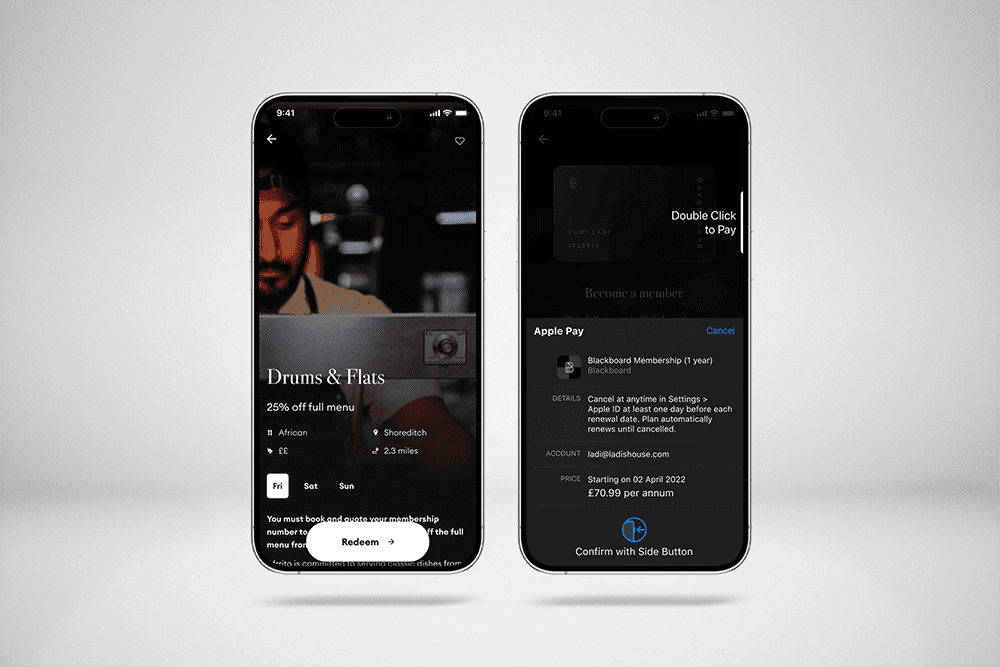
Restaurant details
Large header photos
A short brand story for authenticity
Quick access to menu, opening hours, map and contact
Recommended dishes section
Save and share actions at primary touchpoints
Search & filters
Search redesigned around:
Cuisine
Vibe
Dietary tags
Location
Budget
Community and culture
A dedicated section for:
Chef profiles
Behind-the-scenes stories
Events
This reinforced the mission: support the ecosystem, not just list businesses.
The Final Design
Home / discovery feed
A curated mix of new spots, popular places, categories, and neighbourhood highlights
Bold imagery to inspire discovery
Personalised suggestions based on browsing behaviour
Restaurant details
Large header photos
A short brand story for authenticity
Quick access to menu, opening hours, map and contact
Recommended dishes section
Save and share actions at primary touchpoints
Search & filters
Search redesigned around:
Cuisine
Vibe
Dietary tags
Location
Budget
Community and culture
A dedicated section for:
Chef profiles
Behind-the-scenes stories
Events
This reinforced the mission: support the ecosystem, not just list businesses.
The Final Design
Home / discovery feed
A curated mix of new spots, popular places, categories, and neighbourhood highlights
Bold imagery to inspire discovery
Personalised suggestions based on browsing behaviour
Restaurant details
Large header photos
A short brand story for authenticity
Quick access to menu, opening hours, map and contact
Recommended dishes section
Save and share actions at primary touchpoints
Search & filters
Search redesigned around:
Cuisine
Vibe
Dietary tags
Location
Budget
Community and culture
A dedicated section for:
Chef profiles
Behind-the-scenes stories
Events
This reinforced the mission: support the ecosystem, not just list businesses.
Key Decisions (and why they mattered)
1. Story-first restaurant profiles
Users connected more deeply when they understood the people behind the business. This boosted trust and motivation to visit.
2. “Vibes” as a filtering system
Most users choose where to eat based on atmosphere.
Introducing vibe-based filtering made discovery feel human and relatable.
3. Curated lists instead of infinite scrolling
Curation combats decision fatigue especially for users who want strong guidance.
4. Save & share features as first-class citizens
Sharing is a cultural behaviour; promoting it helped restaurants gain organic visibility.
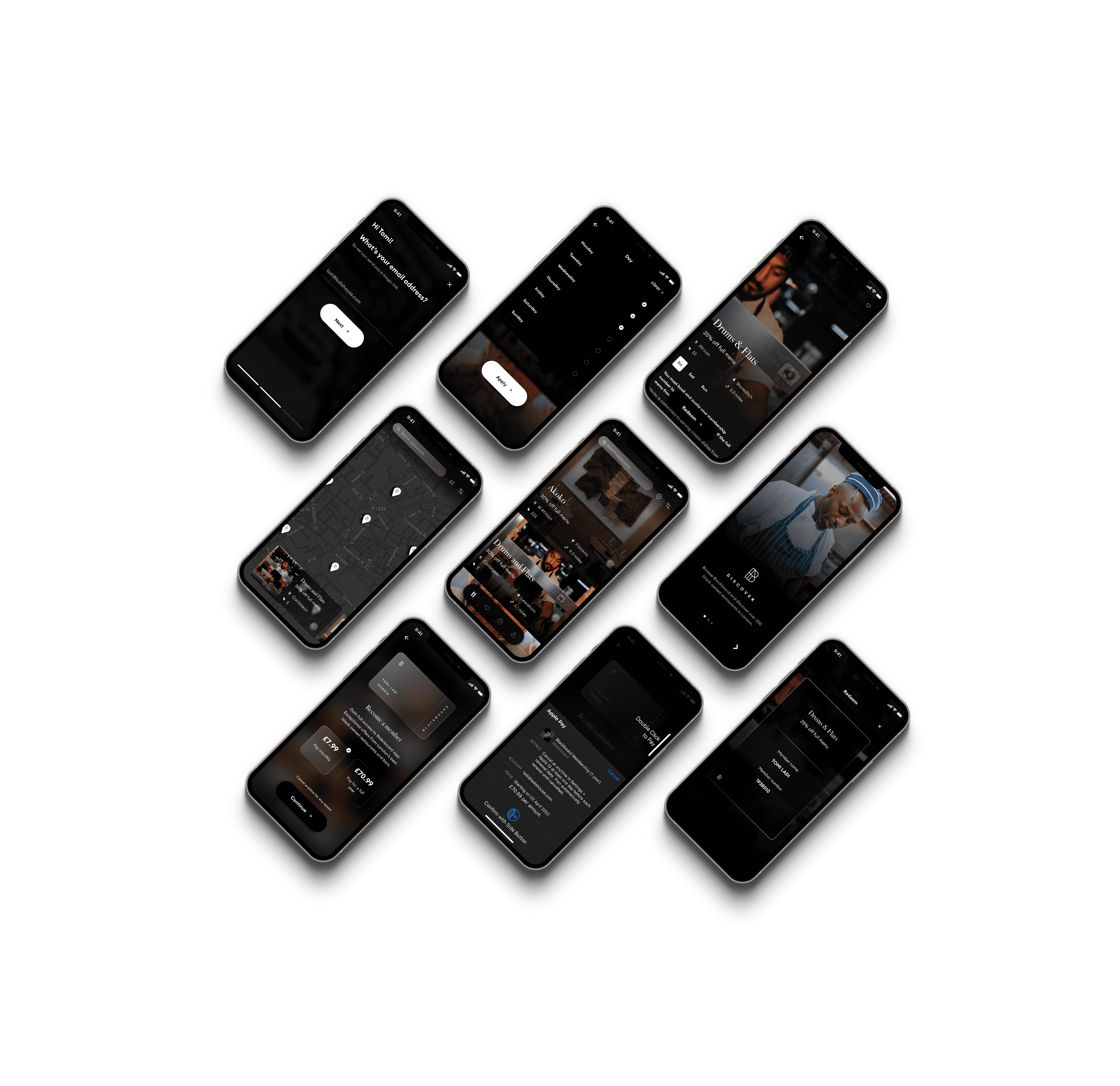
5. A clean, high-contrast dark UI
Testing showed users strongly preferred a premium, cinematic look that reinforced cultural authenticity.
Key Decisions (and why they mattered)
1. Story-first restaurant profiles
Users connected more deeply when they understood the people behind the business. This boosted trust and motivation to visit.
2. “Vibes” as a filtering system
Most users choose where to eat based on atmosphere.
Introducing vibe-based filtering made discovery feel human and relatable.
3. Curated lists instead of infinite scrolling
Curation combats decision fatigue especially for users who want strong guidance.
4. Save & share features as first-class citizens
Sharing is a cultural behaviour; promoting it helped restaurants gain organic visibility.
5. A clean, high-contrast dark UI
Testing showed users strongly preferred a premium, cinematic look that reinforced cultural authenticity.
Key Decisions (and why they mattered)
1. Story-first restaurant profiles
Users connected more deeply when they understood the people behind the business. This boosted trust and motivation to visit.
2. “Vibes” as a filtering system
Most users choose where to eat based on atmosphere.
Introducing vibe-based filtering made discovery feel human and relatable.
3. Curated lists instead of infinite scrolling
Curation combats decision fatigue especially for users who want strong guidance.
4. Save & share features as first-class citizens
Sharing is a cultural behaviour; promoting it helped restaurants gain organic visibility.
5. A clean, high-contrast dark UI
Testing showed users strongly preferred a premium, cinematic look that reinforced cultural authenticity.
Impact
App launched to an initial community of: ~350 users
Early engagement: 3.2× repeat browsing within first month
Restaurant sign-ups: 30+ businesses onboarded
Positive feedback around trustworthiness, ease of discovery, and cultural representation
Impact
App launched to an initial community of: ~350 users
Early engagement: 3.2× repeat browsing within first month
Restaurant sign-ups: 30+ businesses onboarded
Positive feedback around trustworthiness, ease of discovery, and cultural representation
Impact
App launched to an initial community of: ~350 users
Early engagement: 3.2× repeat browsing within first month
Restaurant sign-ups: 30+ businesses onboarded
Positive feedback around trustworthiness, ease of discovery, and cultural representation
What I Learned
Designing for culture requires deep listening and genuine representation
Discovery apps succeed when they feel curated, not crowded
Storytelling is a key UX component, not a marketing layer
Restaurant owners need tools that fit their reality. Low effort, high visibility
Early testing prevented complex features and kept the experience simple and intentional
What I Learned
Designing for culture requires deep listening and genuine representation
Discovery apps succeed when they feel curated, not crowded
Storytelling is a key UX component, not a marketing layer
Restaurant owners need tools that fit their reality. Low effort, high visibility
Early testing prevented complex features and kept the experience simple and intentional
What I Learned
Designing for culture requires deep listening and genuine representation
Discovery apps succeed when they feel curated, not crowded
Storytelling is a key UX component, not a marketing layer
Restaurant owners need tools that fit their reality. Low effort, high visibility
Early testing prevented complex features and kept the experience simple and intentional
Other Cases
Other Cases
Other Cases