inCard
A multi-currency wallet and virtual card platform designed to help e-commerce merchants manage ad spend, reduce reconciliation time, and gain clearer financial control.
Client:
inCard
Industry:
FinTech
Deliverables:
MVP Product Design
Context:
Lead Product Designer

Background & Opportunity
As e-commerce businesses scale internationally, their financial operations become increasingly complex. Merchants operate across multiple sales channels, advertising platforms, and currencies, often without tooling that reflects how their teams actually work. Marketing teams focus on speed and experimentation, while finance teams need structure, traceability, and clean data.
At the time of this project, most merchants relied on a patchwork of tools: shared cards, spreadsheets, and manual exports. This created friction, slowed decision-making, and introduced errors into bookkeeping processes. The opportunity was to design a focused MVP that simplified spend management and reconciliation, while validating real demand before investing in a larger platform.
Background & Opportunity
As e-commerce businesses scale internationally, their financial operations become increasingly complex. Merchants operate across multiple sales channels, advertising platforms, and currencies, often without tooling that reflects how their teams actually work. Marketing teams focus on speed and experimentation, while finance teams need structure, traceability, and clean data.
At the time of this project, most merchants relied on a patchwork of tools: shared cards, spreadsheets, and manual exports. This created friction, slowed decision-making, and introduced errors into bookkeeping processes. The opportunity was to design a focused MVP that simplified spend management and reconciliation, while validating real demand before investing in a larger platform.
Background & Opportunity
As e-commerce businesses scale internationally, their financial operations become increasingly complex. Merchants operate across multiple sales channels, advertising platforms, and currencies, often without tooling that reflects how their teams actually work. Marketing teams focus on speed and experimentation, while finance teams need structure, traceability, and clean data.
At the time of this project, most merchants relied on a patchwork of tools: shared cards, spreadsheets, and manual exports. This created friction, slowed decision-making, and introduced errors into bookkeeping processes. The opportunity was to design a focused MVP that simplified spend management and reconciliation, while validating real demand before investing in a larger platform.
The Problem
Merchant pain
Merchants consistently described frustration with how fragmented their financial workflows had become.
Managing multiple currencies introduced constant FX and tracking issues
Shared cards were used across campaigns and vendors, obscuring accountability
Receipts and transaction metadata were inconsistent or missing
Finance teams spent hours cleaning CSV exports and manually tagging spend
Campaign-level visibility was delayed or inaccurate
Business challenge
From a business perspective, complexity posed a serious risk.
High operational friction discouraged adoption
Long onboarding and verification flows delayed time to value
The MVP needed to prove usefulness quickly to justify further investment
Primary goal
Design and launch an MVP that meaningfully reduced reconciliation effort, enabled campaign-level spend control, and demonstrated clear product-market demand.
The Problem
Merchant pain
Merchants consistently described frustration with how fragmented their financial workflows had become.
Managing multiple currencies introduced constant FX and tracking issues
Shared cards were used across campaigns and vendors, obscuring accountability
Receipts and transaction metadata were inconsistent or missing
Finance teams spent hours cleaning CSV exports and manually tagging spend
Campaign-level visibility was delayed or inaccurate
Business challenge
From a business perspective, complexity posed a serious risk.
High operational friction discouraged adoption
Long onboarding and verification flows delayed time to value
The MVP needed to prove usefulness quickly to justify further investment
Primary goal
Design and launch an MVP that meaningfully reduced reconciliation effort, enabled campaign-level spend control, and demonstrated clear product-market demand.
The Problem
Merchant pain
Merchants consistently described frustration with how fragmented their financial workflows had become.
Managing multiple currencies introduced constant FX and tracking issues
Shared cards were used across campaigns and vendors, obscuring accountability
Receipts and transaction metadata were inconsistent or missing
Finance teams spent hours cleaning CSV exports and manually tagging spend
Campaign-level visibility was delayed or inaccurate
Business challenge
From a business perspective, complexity posed a serious risk.
High operational friction discouraged adoption
Long onboarding and verification flows delayed time to value
The MVP needed to prove usefulness quickly to justify further investment
Primary goal
Design and launch an MVP that meaningfully reduced reconciliation effort, enabled campaign-level spend control, and demonstrated clear product-market demand.

Research & Insights
To ensure the MVP addressed real operational pain rather than surface-level symptoms, we ran a focused but rigorous discovery phase. The goal was not to validate a preconceived solution, but to understand how merchants actually managed spend, reconciliation, and accountability across teams.
We intentionally spoke to multiple roles within the same businesses, as early conversations revealed that marketing and finance teams experienced the same problems very differently.
Research methods
We used a mix of quantitative and qualitative research to balance scale with depth.
Competitor audit
We reviewed existing solutions including Wise Business, Revolut Business, and Stripe Issuing.
This helped us understand:How spend was structured today
Where existing tools excelled
Where merchants were still relying on workarounds
Quantitative survey
Approximately 220 merchants responded to a short survey focused on:How they currently managed ad spend
How reconciliation was handled
Time spent on bookkeeping each month
Tools used by marketing vs. finance
Moderated interviews
We conducted 18 in-depth interviews with:E-commerce founders
Marketing leads
Finance managers
These sessions allowed us to map end-to-end workflows, uncover edge cases, and understand the emotional friction caused by financial tooling.
Research & Insights
To ensure the MVP addressed real operational pain rather than surface-level symptoms, we ran a focused but rigorous discovery phase. The goal was not to validate a preconceived solution, but to understand how merchants actually managed spend, reconciliation, and accountability across teams.
We intentionally spoke to multiple roles within the same businesses, as early conversations revealed that marketing and finance teams experienced the same problems very differently.
Research methods
We used a mix of quantitative and qualitative research to balance scale with depth.
Competitor audit
We reviewed existing solutions including Wise Business, Revolut Business, and Stripe Issuing.
This helped us understand:How spend was structured today
Where existing tools excelled
Where merchants were still relying on workarounds
Quantitative survey
Approximately 220 merchants responded to a short survey focused on:How they currently managed ad spend
How reconciliation was handled
Time spent on bookkeeping each month
Tools used by marketing vs. finance
Moderated interviews
We conducted 18 in-depth interviews with:E-commerce founders
Marketing leads
Finance managers
These sessions allowed us to map end-to-end workflows, uncover edge cases, and understand the emotional friction caused by financial tooling.
Research & Insights
To ensure the MVP addressed real operational pain rather than surface-level symptoms, we ran a focused but rigorous discovery phase. The goal was not to validate a preconceived solution, but to understand how merchants actually managed spend, reconciliation, and accountability across teams.
We intentionally spoke to multiple roles within the same businesses, as early conversations revealed that marketing and finance teams experienced the same problems very differently.
Research methods
We used a mix of quantitative and qualitative research to balance scale with depth.
Competitor audit
We reviewed existing solutions including Wise Business, Revolut Business, and Stripe Issuing.
This helped us understand:How spend was structured today
Where existing tools excelled
Where merchants were still relying on workarounds
Quantitative survey
Approximately 220 merchants responded to a short survey focused on:How they currently managed ad spend
How reconciliation was handled
Time spent on bookkeeping each month
Tools used by marketing vs. finance
Moderated interviews
We conducted 18 in-depth interviews with:E-commerce founders
Marketing leads
Finance managers
These sessions allowed us to map end-to-end workflows, uncover edge cases, and understand the emotional friction caused by financial tooling.
What we observed
Across research, several consistent patterns emerged.
1. Payments were not the problem, reconciliation was
Most merchants could already spend money easily. The real cost came after transactions occurred.
CSV exports were messy and inconsistent
Transactions lacked meaningful labels
Receipts were scattered across inboxes and platforms
Finance teams spent hours re-tagging spend manually
This reframed the problem from “better cards” to better post-spend clarity.
2. Marketing and finance were optimising for different outcomes
Marketing teams valued speed and flexibility.
Finance teams valued accuracy and structure.
Shared cards became a compromise solution that pleased neither group.
Marketing lacked autonomy
Finance lacked visibility
Accountability was always delayed
This tension made it clear that the product needed to encode structure automatically, rather than relying on human discipline.
3. Manual tagging was brittle and unreliable
Many teams attempted to tag transactions after the fact.
Tags were forgotten
Naming conventions drifted
Data consistency broke down over time
Merchants repeatedly told us that if something requires discipline, it will eventually fail.
This insight directly informed the per-campaign card model.
What we observed
Across research, several consistent patterns emerged.
1. Payments were not the problem, reconciliation was
Most merchants could already spend money easily. The real cost came after transactions occurred.
CSV exports were messy and inconsistent
Transactions lacked meaningful labels
Receipts were scattered across inboxes and platforms
Finance teams spent hours re-tagging spend manually
This reframed the problem from “better cards” to better post-spend clarity.
2. Marketing and finance were optimising for different outcomes
Marketing teams valued speed and flexibility.
Finance teams valued accuracy and structure.
Shared cards became a compromise solution that pleased neither group.
Marketing lacked autonomy
Finance lacked visibility
Accountability was always delayed
This tension made it clear that the product needed to encode structure automatically, rather than relying on human discipline.
3. Manual tagging was brittle and unreliable
Many teams attempted to tag transactions after the fact.
Tags were forgotten
Naming conventions drifted
Data consistency broke down over time
Merchants repeatedly told us that if something requires discipline, it will eventually fail.
This insight directly informed the per-campaign card model.
What we observed
Across research, several consistent patterns emerged.
1. Payments were not the problem, reconciliation was
Most merchants could already spend money easily. The real cost came after transactions occurred.
CSV exports were messy and inconsistent
Transactions lacked meaningful labels
Receipts were scattered across inboxes and platforms
Finance teams spent hours re-tagging spend manually
This reframed the problem from “better cards” to better post-spend clarity.
2. Marketing and finance were optimising for different outcomes
Marketing teams valued speed and flexibility.
Finance teams valued accuracy and structure.
Shared cards became a compromise solution that pleased neither group.
Marketing lacked autonomy
Finance lacked visibility
Accountability was always delayed
This tension made it clear that the product needed to encode structure automatically, rather than relying on human discipline.
3. Manual tagging was brittle and unreliable
Many teams attempted to tag transactions after the fact.
Tags were forgotten
Naming conventions drifted
Data consistency broke down over time
Merchants repeatedly told us that if something requires discipline, it will eventually fail.
This insight directly informed the per-campaign card model.
4. Onboarding friction delayed trust
Lengthy verification flows created hesitation.
Merchants wanted to:
understand the interface
explore wallets
see how cards and exports worked
before committing sensitive documents.
This suggested a staged onboarding approach that delayed verification until it was truly required.
Insight synthesis
From the research, we identified four foundational truths that shaped the MVP:
Structure must be automatic
The system should enforce clarity without relying on user behaviour.Reconciliation is where value compounds
Saving five minutes per transaction saves hours per month.Different roles need the same data presented differently
Marketing needs speed. Finance needs confidence.Time to first value matters more than completeness
Merchants needed to feel progress before finishing setup.
How insights informed design decisions
Each major insight mapped directly to a product decision:
Reconciliation pain → one-click exports with clean structure
Role tension → per-campaign virtual cards
Manual tagging failure → enforced spend segmentation
Onboarding friction → staged verification
This ensured the MVP was tightly aligned with real workflows, not hypothetical ones.
4. Onboarding friction delayed trust
Lengthy verification flows created hesitation.
Merchants wanted to:
understand the interface
explore wallets
see how cards and exports worked
before committing sensitive documents.
This suggested a staged onboarding approach that delayed verification until it was truly required.
Insight synthesis
From the research, we identified four foundational truths that shaped the MVP:
Structure must be automatic
The system should enforce clarity without relying on user behaviour.Reconciliation is where value compounds
Saving five minutes per transaction saves hours per month.Different roles need the same data presented differently
Marketing needs speed. Finance needs confidence.Time to first value matters more than completeness
Merchants needed to feel progress before finishing setup.
How insights informed design decisions
Each major insight mapped directly to a product decision:
Reconciliation pain → one-click exports with clean structure
Role tension → per-campaign virtual cards
Manual tagging failure → enforced spend segmentation
Onboarding friction → staged verification
This ensured the MVP was tightly aligned with real workflows, not hypothetical ones.
4. Onboarding friction delayed trust
Lengthy verification flows created hesitation.
Merchants wanted to:
understand the interface
explore wallets
see how cards and exports worked
before committing sensitive documents.
This suggested a staged onboarding approach that delayed verification until it was truly required.
Insight synthesis
From the research, we identified four foundational truths that shaped the MVP:
Structure must be automatic
The system should enforce clarity without relying on user behaviour.Reconciliation is where value compounds
Saving five minutes per transaction saves hours per month.Different roles need the same data presented differently
Marketing needs speed. Finance needs confidence.Time to first value matters more than completeness
Merchants needed to feel progress before finishing setup.
How insights informed design decisions
Each major insight mapped directly to a product decision:
Reconciliation pain → one-click exports with clean structure
Role tension → per-campaign virtual cards
Manual tagging failure → enforced spend segmentation
Onboarding friction → staged verification
This ensured the MVP was tightly aligned with real workflows, not hypothetical ones.

Defining the MVP Scope
Rather than building a broad platform, we deliberately constrained scope to focus on the highest-impact problems.
Core jobs to be done
Hold and manage funds in multiple currencies
Create virtual cards per campaign or vendor
Export clean, structured transaction data for reconciliation
Explicit non-goals
To protect speed and clarity, we deferred:
Advanced analytics dashboards
Automated accounting rules
Complex role and permission systems
This ensured the MVP delivered immediate value without unnecessary complexity.
Defining the MVP Scope
Rather than building a broad platform, we deliberately constrained scope to focus on the highest-impact problems.
Core jobs to be done
Hold and manage funds in multiple currencies
Create virtual cards per campaign or vendor
Export clean, structured transaction data for reconciliation
Explicit non-goals
To protect speed and clarity, we deferred:
Advanced analytics dashboards
Automated accounting rules
Complex role and permission systems
This ensured the MVP delivered immediate value without unnecessary complexity.
Defining the MVP Scope
Rather than building a broad platform, we deliberately constrained scope to focus on the highest-impact problems.
Core jobs to be done
Hold and manage funds in multiple currencies
Create virtual cards per campaign or vendor
Export clean, structured transaction data for reconciliation
Explicit non-goals
To protect speed and clarity, we deferred:
Advanced analytics dashboards
Automated accounting rules
Complex role and permission systems
This ensured the MVP delivered immediate value without unnecessary complexity.
Design Approach & Process
Process
The design process prioritised speed, clarity, and validation.
Flow mapping to understand core tasks
Low-fidelity wireframes to test logic early
Interactive prototypes to validate mental models
Usability testing with merchants (n≈10)
High-fidelity UI design for MVP release
Design principles
Clarity over completeness
Immediate visibility into spend
Minimal setup before first value
Outputs that finance teams can trust
These principles guided every design decision.
Design Approach & Process
Process
The design process prioritised speed, clarity, and validation.
Flow mapping to understand core tasks
Low-fidelity wireframes to test logic early
Interactive prototypes to validate mental models
Usability testing with merchants (n≈10)
High-fidelity UI design for MVP release
Design principles
Clarity over completeness
Immediate visibility into spend
Minimal setup before first value
Outputs that finance teams can trust
These principles guided every design decision.
Design Approach & Process
Process
The design process prioritised speed, clarity, and validation.
Flow mapping to understand core tasks
Low-fidelity wireframes to test logic early
Interactive prototypes to validate mental models
Usability testing with merchants (n≈10)
High-fidelity UI design for MVP release
Design principles
Clarity over completeness
Immediate visibility into spend
Minimal setup before first value
Outputs that finance teams can trust
These principles guided every design decision.

Key Design Decisions
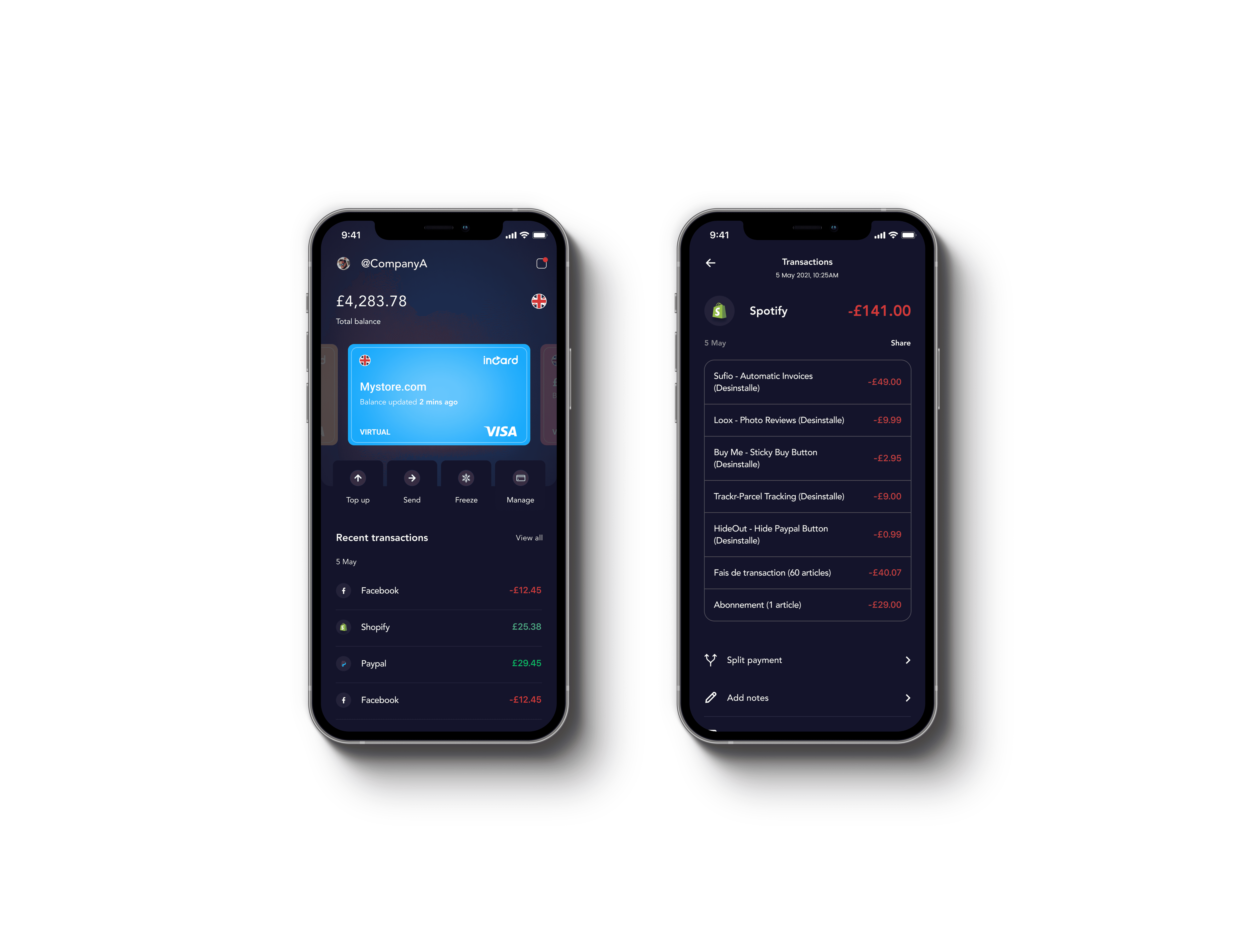
1. Per-campaign virtual cards
Each campaign or vendor was assigned its own virtual card.
Why it mattered
Spend segmentation became automatic
Manual tagging was eliminated
Accountability was visible instantly
Reduced reconciliation effort downstream
2. Staged onboarding
Merchants could explore wallets and the interface before completing full verification.
Why it mattered
Lowered initial friction
Increased early activation
Allowed users to understand value before commitment
Verification required only to issue cards
3. One-click reconciliation exports
Exports were structured to map cleanly into accounting workflows.
Why it mattered
Reduced hours of spreadsheet clean-up
Increased confidence from finance teams
Extended the product’s value beyond marketing use cases
Key Design Decisions
1. Per-campaign virtual cards
Each campaign or vendor was assigned its own virtual card.
Why it mattered
Spend segmentation became automatic
Manual tagging was eliminated
Accountability was visible instantly
Reduced reconciliation effort downstream
2. Staged onboarding
Merchants could explore wallets and the interface before completing full verification.
Why it mattered
Lowered initial friction
Increased early activation
Allowed users to understand value before commitment
Verification required only to issue cards
3. One-click reconciliation exports
Exports were structured to map cleanly into accounting workflows.
Why it mattered
Reduced hours of spreadsheet clean-up
Increased confidence from finance teams
Extended the product’s value beyond marketing use cases
Key Design Decisions
1. Per-campaign virtual cards
Each campaign or vendor was assigned its own virtual card.
Why it mattered
Spend segmentation became automatic
Manual tagging was eliminated
Accountability was visible instantly
Reduced reconciliation effort downstream
2. Staged onboarding
Merchants could explore wallets and the interface before completing full verification.
Why it mattered
Lowered initial friction
Increased early activation
Allowed users to understand value before commitment
Verification required only to issue cards
3. One-click reconciliation exports
Exports were structured to map cleanly into accounting workflows.
Why it mattered
Reduced hours of spreadsheet clean-up
Increased confidence from finance teams
Extended the product’s value beyond marketing use cases
Final Solution & Delivery
Core features
Multi-currency business wallets
Virtual cards per campaign or vendor
Transaction timelines grouped by card
One-click exports for bookkeeping tools
Design deliverables
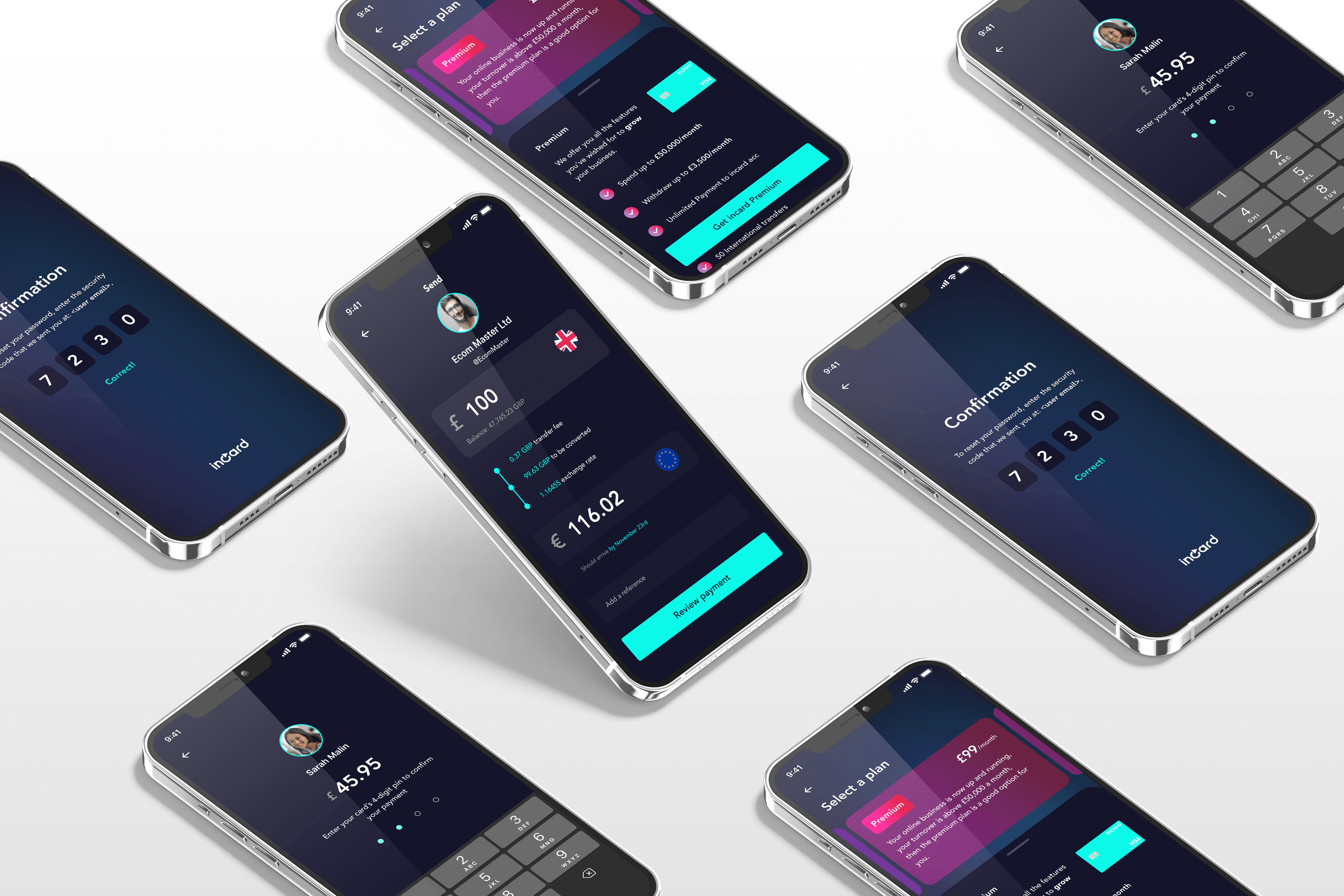
Web and mobile MVP flows
High-fidelity UI designs
Component library and design tokens
Developer handoff documentation with acceptance criteria and React-aligned specs
Close collaboration with engineering enabled incremental releases while onboarding pilot merchants.
Final Solution & Delivery
Core features
Multi-currency business wallets
Virtual cards per campaign or vendor
Transaction timelines grouped by card
One-click exports for bookkeeping tools
Design deliverables
Web and mobile MVP flows
High-fidelity UI designs
Component library and design tokens
Developer handoff documentation with acceptance criteria and React-aligned specs
Close collaboration with engineering enabled incremental releases while onboarding pilot merchants.
Final Solution & Delivery
Core features
Multi-currency business wallets
Virtual cards per campaign or vendor
Transaction timelines grouped by card
One-click exports for bookkeeping tools
Design deliverables
Web and mobile MVP flows
High-fidelity UI designs
Component library and design tokens
Developer handoff documentation with acceptance criteria and React-aligned specs
Close collaboration with engineering enabled incremental releases while onboarding pilot merchants.

Outcomes & Learnings
Outcomes (directional)
Faster merchant activation compared to previous workflows
Significant reduction in reconciliation time reported by pilots
Strong adoption of the per-campaign card model
Positive feedback from both finance and marketing stakeholders
Key learnings
MVPs succeed when they solve one painful job exceptionally well
Finance tools must prioritise trust, predictability, and data clarity
Staged onboarding improves early engagement and confidence
Clean data structures are often more valuable than complex dashboards
Outcomes & Learnings
Outcomes (directional)
Faster merchant activation compared to previous workflows
Significant reduction in reconciliation time reported by pilots
Strong adoption of the per-campaign card model
Positive feedback from both finance and marketing stakeholders
Key learnings
MVPs succeed when they solve one painful job exceptionally well
Finance tools must prioritise trust, predictability, and data clarity
Staged onboarding improves early engagement and confidence
Clean data structures are often more valuable than complex dashboards
Outcomes & Learnings
Outcomes (directional)
Faster merchant activation compared to previous workflows
Significant reduction in reconciliation time reported by pilots
Strong adoption of the per-campaign card model
Positive feedback from both finance and marketing stakeholders
Key learnings
MVPs succeed when they solve one painful job exceptionally well
Finance tools must prioritise trust, predictability, and data clarity
Staged onboarding improves early engagement and confidence
Clean data structures are often more valuable than complex dashboards
Other Cases
Other Cases
Other Cases